
Casey’s Fall
Play Casey’s Fall
Casey’s Fall Screenshots
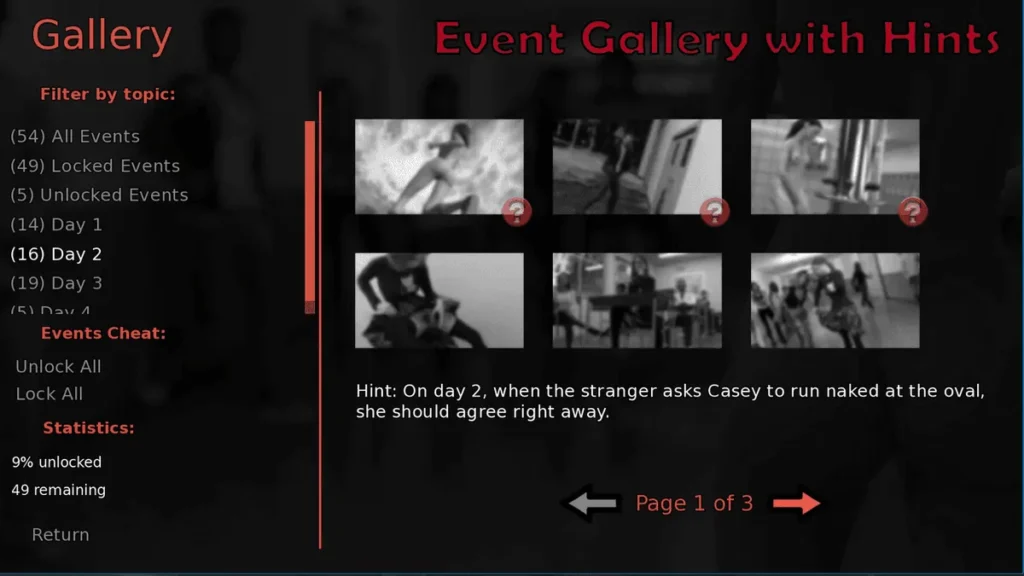


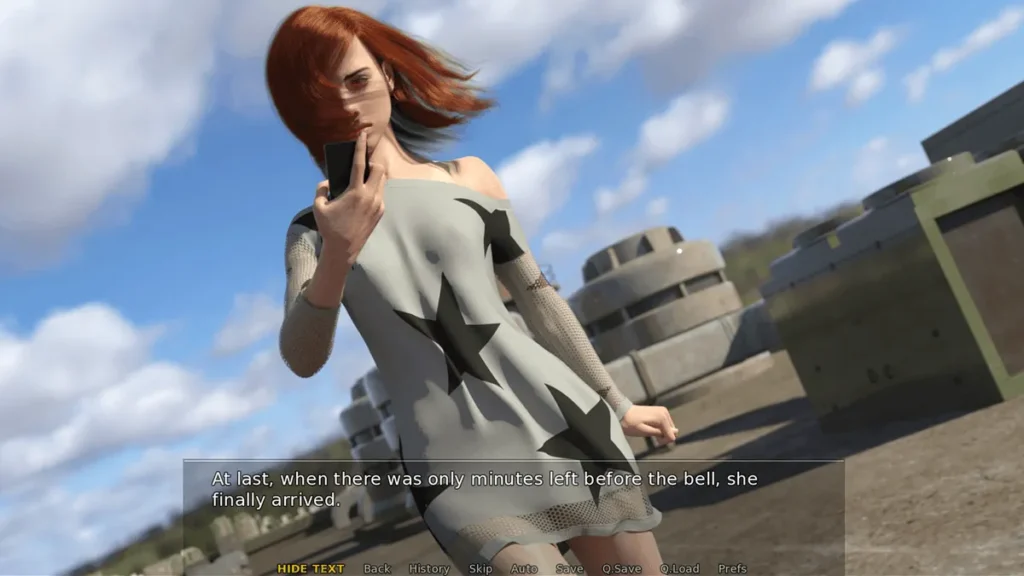











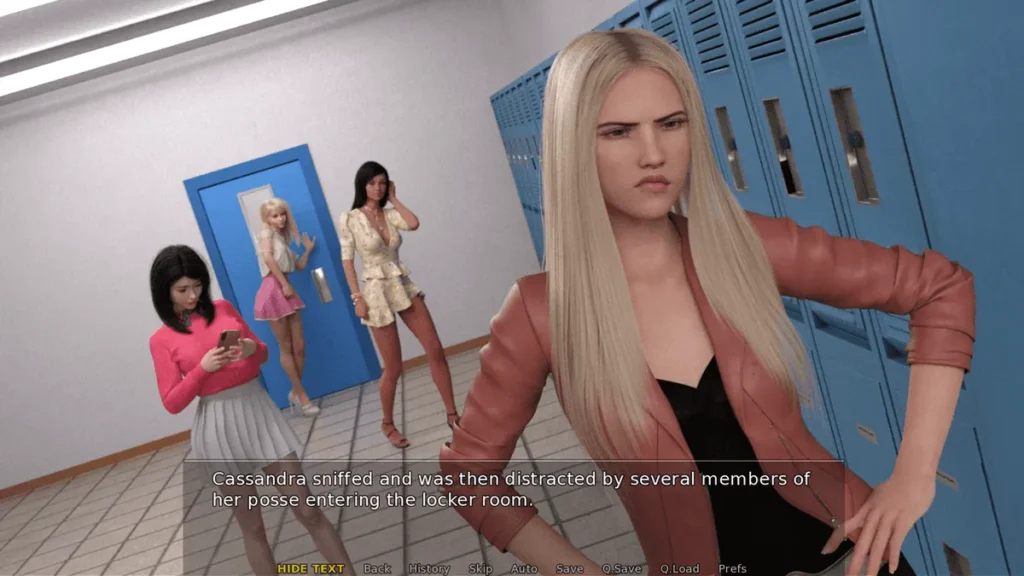










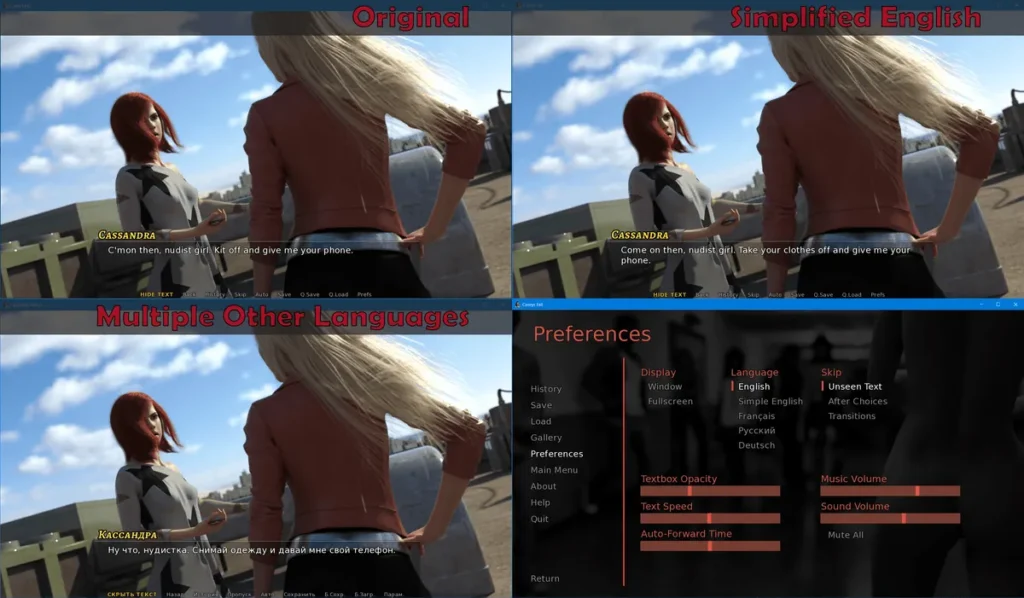
Casey’s Fall review
Explore the narrative-driven visual novel experience with blackmail, choices, and character-driven storytelling
Casey’s Fall is a narrative-driven visual novel that combines point-and-click adventure elements with a choice-driven story system. Players follow tech student Casey Reine as she navigates a mysterious blackmail situation in a perverse world where nudity and slavery are legally registered. The game stands out for its focus on character development, relationship dynamics, and consequence-driven storytelling rather than explicit content. With beautifully rendered environments, voice-acted characters, and multiple branching paths, Casey’s Fall offers players a unique experience that emphasizes investigation, dialogue choices, and moral decision-making throughout the narrative.
Understanding Casey’s Fall: Core Gameplay Mechanics and Features
Let’s be honest: many story games make you feel like a passenger. You’re just clicking through, watching a tale unfold. Casey’s Fall is the exact opposite. From the moment you boot it up, you’re handed the case file, the pressure, and the consequences. It’s a choice-driven narrative visual novel that masterfully blends classic adventure game sensibilities with modern tension. 🕵️♂️
This chapter is your field manual. We’re going to break down the Casey’s Fall gameplay mechanics that transform you from a passive reader into an active investigator. You’ll learn how to navigate its world, talk to its guarded characters, and piece together a truth that someone desperately wants to hide. Forget just watching a story—here, you build it, break it, and live with the fallout.
How Point-and-Click Adventure Elements Shape Your Investigation 🗺️
Remember those classic point-and-click adventure game titles, scouring every pixel for a useful item? Casey’s Fall takes that DNA and injects it with pure narrative adrenaline. Your primary tool isn’t a bizarre inventory item; it’s your perception.
The environments in Casey’s Fall aren’t just pretty backgrounds. They are crime scenes, alibis, and character portraits waiting to be decoded. You click to move, you click to examine, and most importantly, you click to think. When you hover over a suspicious smudge on a windowsill or a half-empty glass on a desk, the cursor changes, inviting you to look closer. This isn’t busywork. Every discovered detail is a potential key.
I remember one playthrough where I was utterly stuck. A character’s story felt watertight, and I was ready to accuse someone else. On a whim, I re-examined a seemingly innocuous family photo in their living room. Zooming in, I noticed a watch on a wrist that didn’t match the timeline they’d just given me. That single, silent clue collection and deduction system moment, born from pure point-and-click exploration, cracked the entire case wide open. The game had given me the truth; I just had to be diligent enough to find it.
This mechanic ensures you are an active participant in the investigation. The story won’t progress just by clicking through dialogue. You must engage with the space, treat every room as a puzzle, and log your findings. It perfectly marries the tactile satisfaction of a point-and-click adventure game with the psychological depth of a novel, making you feel like a genuine detective building a case from the ground up.
Dialogue Systems and Tension Meters: Making Choices That Matter 💬
If exploration is the bones of your investigation, then dialogue is its pounding heart. In Casey’s Fall, every conversation is an interrogation, a negotiation, or a fragile dance of trust. This is where the character relationship mechanics are laid bare, and your approach has immediate, visible consequences.
You’re not given generic “Good/Evil” options. Instead, you choose your tone: Assertive, Sympathetic, or Sarcastic. Picking a tone is like choosing your weapon for the conversation.
- Assertive is your direct pressure. It’s for cutting through lies and demanding answers, but it risks shutting a character down completely.
- Sympathetic is your velvet glove. You’re building rapport, offering an ear, and potentially learning secrets they’d never tell an adversary.
- Sarcastic is your wildcard. It can disarm a tense situation or mock a liar’s weak story, but it can also alienate someone who craves sincerity.
The genius lies in the dialogue choices and tension meter. During intense exchanges, a visible meter (often a flickering bar or a character’s portrait that grows more strained) shows you the pressure you’re applying. Push too hard with Assertive choices, and the meter maxes out—they might storm off, withholding crucial information forever. 🚨
Here’s a personal insight: I once used a relentless string of Assertive choices on a nervous witness, thinking I could bully the truth out of them. The tension meter skyrocketed, they clammed up, and I lost a vital thread for the rest of the game. In a replay, I mixed Sympathetic openings with strategic Sarcastic jabs. The meter stayed in a manageable, productive zone, and they revealed a detail that changed my entire understanding of the blackmail plot. The dialogue choices and tension meter system taught me that investigation is about psychology, not just evidence.
This system is the core of the choice-driven narrative visual novel experience in Casey’s Fall. Your words directly shape who trusts you, who fears you, and what truths are revealed, sending you down radically different story branches.
Clue Collection, Deduction, and Time-Sensitive Decisions ⏳
Your notebook is your best friend in Casey’s Fall. This isn’t a decorative item; it’s the cockpit of your investigation. Every clue you find—a torn letter, a phone record, an inconsistent statement—is automatically logged here. But the game doesn’t connect the dots for you. You have to do the thinking.
The clue collection and deduction system is a thing of beauty. Once you have enough related pieces, you can physically connect them in your notebook. Drag a “muddy boot print” clue and drop it onto a “rainstorm last night” clue. If you’re right, a new deduction forms: “The person was outside during the storm.” This isn’t a guessing game; it’s logical reasoning. The game validates your detective work, making those “Eureka!” moments intensely satisfying. 💡
But the pressure isn’t just social. Casey’s Fall brilliantly employs time-sensitive decisions in games to elevate the stakes. You won’t see a ticking clock on screen, but the narrative creates urgency. A character might say, “Meet me at the docks in ten minutes if you want the documents,” and then the game fast-forwards. You have to decide: do you rush to the meeting, or use those precious minutes to search their now-empty office for clues they didn’t want you to find?
I faced a brutal example of this. I had to choose between chasing a fleeing suspect or staying to comfort a traumatized victim. Chasing could mean catching the blackmailer. Staying could mean securing a witness’s lifelong trust and their full testimony. Both choices locked out the other path. These time-sensitive decisions in games remove the comfort of “doing everything.” They force you to prioritize, to live with the path not taken, and they make every playthrough uniquely yours.
These mechanics—clue deduction and timed choices—work in concert. Missing a clue might mean you lack the evidence to confront a suspect effectively. A poor timed decision might mean you never get a second chance with a key character. It’s a consequence-driven machine where your skill as an investigator is constantly tested.
| Core Mechanic | How It Works | Impact on Story & Investigation |
|---|---|---|
| Dialogue & Interrogation | Choose between Assertive, Sympathetic, or Sarcastic tones while monitoring a visible tension meter during conversations. | Directly controls character trust and access to information. High tension can permanently lock story branches and clues. |
| Clue Collection & Deduction | Examine scenes to find clues auto-logged in a notebook. Actively connect related clues to form new deductions. | Progress is gated by your deductive reasoning. Missing or failing to connect clues can leave you unable to challenge lies or unlock critical story paths. |
| Time-Sensitive Choices | Narrative prompts force you to choose between two urgent actions, often locking you out of one path permanently. | Creates irreversible forks in the narrative, ensuring no single playthrough sees everything and raising the stakes of every decision. |
It’s worth a special note: some versions of Casey’s Fall are designed as a kinetic novel, focusing purely on the narrative without these interactive choices. However, the experience we’re diving into here is the full, interactive iteration where these Casey’s Fall gameplay mechanics reign supreme. This is the version where you are truly in the driver’s seat.
Ultimately, every system in Casey’s Fall—the point-and-click scrutiny, the tense dialogue dance, the logical deduction, and the punishing clocks—serves one goal: to make you feel like an investigator. You’re not collecting trophies; you’re building a case and managing human relationships under pressure. The character relationship mechanics and the clue collection and deduction system are not separate features; they are intertwined strands of the same rope, and you’re the one deciding whether it becomes a lifeline or a noose. Your success isn’t measured in a win screen, but in the clarity of the truth you uncover and the fragile trust you manage to hold onto in a world designed to break it. 🔍
Casey’s Fall represents a thoughtfully crafted narrative experience that prioritizes storytelling and character development over traditional adult game conventions. The combination of point-and-click investigation mechanics, consequence-driven dialogue choices, and beautifully rendered visuals creates an engaging experience for players seeking a more narrative-focused adult game. Whether you’re drawn to the blackmail and corruption storyline, the character-driven narrative, or the unique approach to adult content themes, Casey’s Fall offers multiple branching paths and meaningful choices that reward careful investigation and relationship building. The game’s emphasis on player agency through dialogue tones, clue collection, and time-sensitive decisions ensures that each playthrough can feel distinct based on your choices. For those interested in visual novels that blend investigation gameplay with mature themes and complex character interactions, Casey’s Fall stands out as a well-executed example of the genre that values narrative depth and player choice.