
Guardians of Eden Screenshots

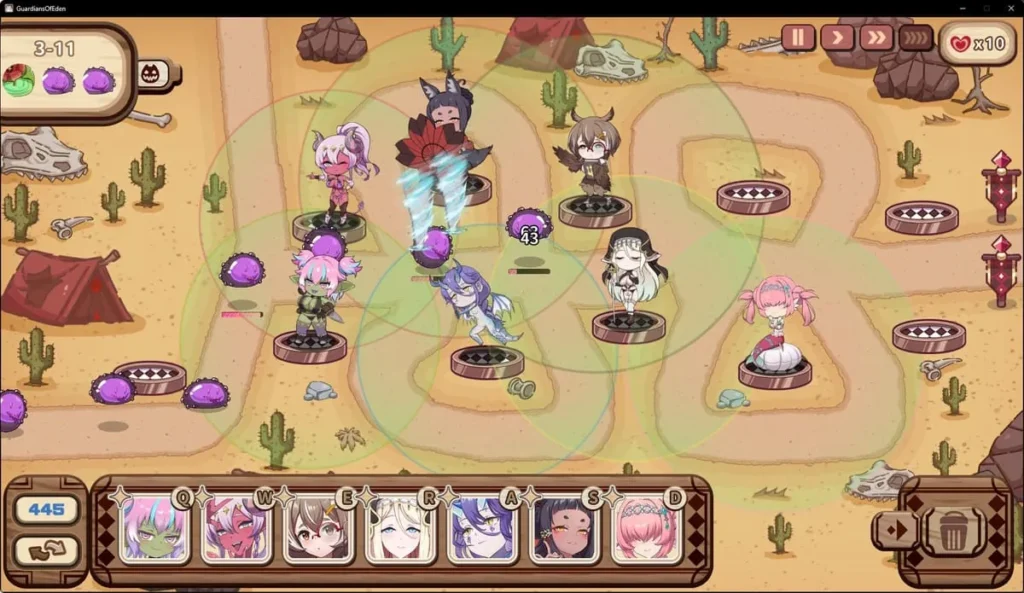
Guardians of Eden review
A player-focused walkthrough and review of the Guardians of Eden game
Guardians of Eden is the main subject of this article, and this piece gives a practical, player-centered look at the game from first impressions to advanced strategies. In the first paragraphs I describe what the game feels like and why players seek out guides and reviews for Guardians of Eden. I hook the reader with a short personal anecdote about discovering the title and outline what the article will cover, including mechanics, progression, customization, storytelling elements, and safety/tips for an improved experience.
Gameplay Basics and Core Mechanics
So, you’ve just landed in the verdant, mysterious world of Guardians of Eden and you’re staring at the screen thinking, “Okay… now what?” 😅 Don’t worry, we’ve all been there. That initial wave of “this is beautiful but overwhelming” is totally normal. This chapter is your friendly guide to the foundational Guardians of Eden gameplay, breaking down everything you need to go from confused newcomer to confident guardian.
Let’s dive into the basics and get you started on the right foot.
What is Guardians of Eden and how does it play?
At its heart, Guardians of Eden is a narrative-rich, survival-lite simulation with a heavy dose of mystical exploration. You play as a newly awakened Guardian, tasked with restoring a fractured paradise. The core Guardians of Eden gameplay loop is a satisfying blend of calming routine and thrilling discovery. You’ll spend your days foraging for resources, tending to magical flora and fauna, rebuilding ancient structures, and uncovering the lost secrets of the land.
The player perspective is a gorgeous third-person view that lets you fully appreciate the stunning environment. The pacing is what I love most—it’s largely in your hands. 🌿 Feel like a chill day of fishing and gardening? Go for it. In the mood to delve into a spooky, monster-inhabited cavern to hunt for rare crystals? That’s on the menu too. Your primary goals are to heal the corrupted zones, befriend the quirky local creatures (who often become vital helpers), and gradually peel back the layers of the story through exploration and artifact recovery.
Think of it as your personal, magical homestead project, but with a deeper purpose and more ancient mysteries lurking in the shadows. Mastering how to play Guardians of Eden is about finding your own rhythm within this beautiful, living world.
Core mechanics: progression, resources, and systems
The magic of Guardians of Eden is held together by its interlocking systems. Understanding these Guardians of Eden mechanics is key to a smooth and enjoyable experience. Let’s break them down.
Progression & Character Growth
Your personal journey is tracked through a Guardians of Eden progression system centered on your Spirit Bond. As you heal the land and complete tasks, your bond strengthens, granting you Spirit Points. These points are used to unlock vital abilities in a skill tree that’s divided into three paths:
* The Path of the Grove: Focuses on cultivation, foraging, and resource gathering efficiency.
* The Path of the Heart: Enhances your interactions with Eden’s creatures, improving taming, training, and companion abilities.
* The Path of the Ancient: Unlocks deeper exploration tools, combat techniques, and puzzle-solving magic for delving into ruins.
You’re not locked into one path—mixing and matching is encouraged! My advice? Grab the basic gathering boost from the Grove and the improved dodge roll from the Ancient path early on. It makes a huge difference.
Resources & Currencies
You’ll juggle several key resources:
* Common Materials: Wood, stone, fiber. The backbone of crafting.
* Rare Elements: Luminescent moss, starfall shards, prismatic ore. Found in dangerous or hidden areas.
* Eden’s Favor: The primary “currency” earned by cleansing corruption. Spend it on major blueprints and story-critical unlocks.
* Spirit Essence: Gained from completed tasks and meditating at shrines. Used for your Spirit Bond skill tree.
Interaction & Relationship Systems
This isn’t a lonely journey! The trainer mechanics (though we call them Guides here) are central. You’ll meet expert characters—like the gruff botanist Kaelen or the historian Mirri—who act as quest hubs and mastery trainers. Building rapport with them by completing personal requests unlocks advanced crafting diagrams, unique items, and chunks of the main story.
Similarly, bonding with creatures isn’t just cute; it’s strategic. A tamed Mossback Tortoise can help you haul more goods, while a Spire Fox can sniff out hidden dig sites. Their care and training become a rewarding side activity.
Core Activities & Loops
Your daily routine will involve:
* Gathering & Crafting: From simple tools to automated garden sprinklers.
* Sanctuary Management: Your home base. Place workbenches, decorate, and organize storage.
* Corruption Cleansing: The main driving quest. Use tools and abilities to purify blighted areas, which often unlocks new zones.
* Exploration & Dungeons: Light puzzle-platforming segments in ancient ruins, requiring your growing toolkit of abilities.
| Primary Resource | Primary Use | Best Early Source |
|---|---|---|
| Sun-Soaked Wood | Basic tools, building frames | Yellow-leaf trees in the Sunsplash Glade |
| Luminous Moss | Potions, light sources | Damp cave walls (use your glow-stone) |
| Eden’s Favor | Unlocking story zones | Cleansing small corruption nodes |
Control tips and UI walkthrough
Feeling comfortable with the Guardians of Eden controls is half the battle. The layout is intuitive, but a few tips will make you feel like a pro.
The Heads-Up Display (HUD) Explained
Your screen is clean but informative:
* Top-Left: Your character’s current objective. Tap the relevant button (often the D-Pad on controller) to set a waypoint.
* Bottom-Left: Quick-select wheel for tools and usable items. Pro Tip: Assign your most-used tools (like the sickle and hammer) to the same slots every time for muscle memory.
* Bottom-Center: Your stamina wheel (blue) and spirit energy bar (green, used for special abilities). Watch that stamina when climbing or sprinting!
* Bottom-Right: Contextual interaction prompts and your currently equipped item.
Key Menu Navigation
Pause the game to access your vital menus:
* Inventory: A grid-based bag. Sort is your best friend! Regularly deposit materials into your Sanctuary’s storage chests.
* Crafting & Building: Separate tabs for portable items (like potions) and sanctuary structures. If a recipe is greyed out, hover over it—the game will tell you what you’re missing.
* Guardian Profile: This is your Guardians of Eden progression hub. Check your Spirit Bond level, spend skill points, and review your codex of discovered lore and creatures.
* Guide Relations: A heart meter shows your standing with each major NPC. Check here regularly for new available requests.
Crucial Tip: In the settings, turn ON “Toggle Sprint” and increase the camera sensitivity by about 20%. This makes exploration feel much smoother and lets you react faster in those ancient ruins.
Your First 30-Minute Action Plan 🚀
Here’s a step-by-step checklist to nail your opening moments:
1. Follow the Introductory Quest until you gain control of your basic movement and tool use.
2. Gather Everything. Pick up 50 units of wood, 30 stone, and 20 fiber from the starting area. Don’t ignore the bushes!
3. Craft the Basic Toolkit. Make the Stone Axe, Stone Pick, and Fishing Rod at your first workbench.
4. Cleanse Your First Small Corruption Node. This will grant you a chunk of Eden’s Favor and teach you the process.
5. Visit Your First Guide, Kaelen. He’s marked on your map. Completing his first request unlocks the crucial watering can blueprint.
6. Build a Storage Chest at your Sanctuary. Unload all your raw materials. Congratulations, you’re now organized!
Let me share a quick story from my first playthrough. I was so excited to explore that I sprinted past all the glowing plants and straight into a corrupted thicket. My tools were basic, my stamina drained, and I got stuck between some toxic spores and a cliff. I had to quit to the main menu to escape! 😳 The lesson? Do not neglect your early tool upgrades. That initial resource grind feels slow, but having a flint axe instead of a stone one dramatically increases your yield, speeding up everything else. My failed expedition was a direct result of impatience.
Ideal Settings for a Better Experience
For the smoothest Guardians of Eden gameplay, I recommend:
* Graphics: Prioritize “Frame Rate” over “Quality” if you’re on a standard console. The art style is beautiful even at lower settings, but a stable frame rate is king for platforming.
* Controls: Switch “Tool Selection” to “Radial Menu” instead of “Linear Scroll.” It’s far quicker in the heat of the moment.
* Gameplay: Enable “Auto-Save Indicators” so you know when the game has saved your progress.
Quick Troubleshooting for Beginners
1. “My tool broke and I’m stranded!” Don’t panic. Fast travel is unlocked from the start. Open your map, select your Sanctuary’s icon, and choose “Return.” You’ll warp back home to craft a replacement.
2. “I can’t find a specific resource!” Use your Spirit Sense (default key: right stick click). It highlights interactive objects and resources in a pulse around you, making that elusive copper vein much easier to spot.
3. “The game is saving too often and causing a hitch!” This is common in the first area. It usually settles down after an hour of play. If it persists, try rebuilding your console’s database or clearing the game’s cache on PC—a quick web search for your platform will show you how.
By internalizing these Guardians of Eden mechanics and Guardians of Eden controls, you’re not just playing—you’re thriving. The initial learning curve is there, but it’s a gentle slope that leads to an incredibly rewarding and peaceful adventure. Now, with these Guardians of Eden early tips in your pocket, you’re ready to step out and truly begin your work as a Guardian. The paradise of Eden awaits your touch
This article wraps up the practical, player-focused coverage of Guardians of Eden by summarizing core gameplay mechanics, progression and customization options, narrative highlights, advanced strategies, and essential technical and safety notes. I reinforce the most actionable tips for new and experienced players, share a brief final personal takeaway about what makes the game engaging, and invite readers to try the suggested builds and tactics, share their own experiences, and ask questions in the comments.