Our Red String
Play Our Red String
Our Red String Screenshots

















Our Red String review
Explore branching narratives, character relationships, and meaningful decisions in this acclaimed visual novel
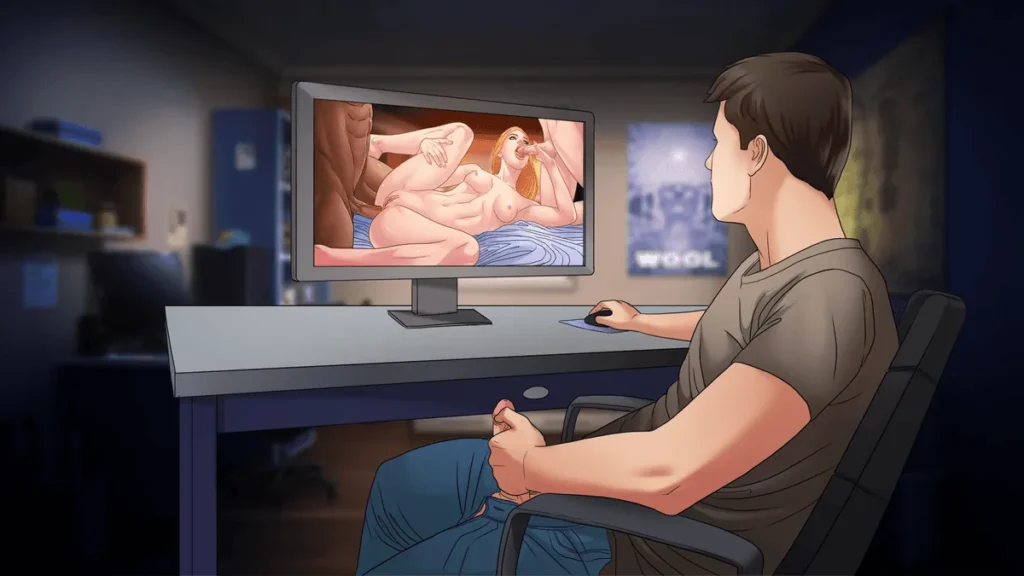
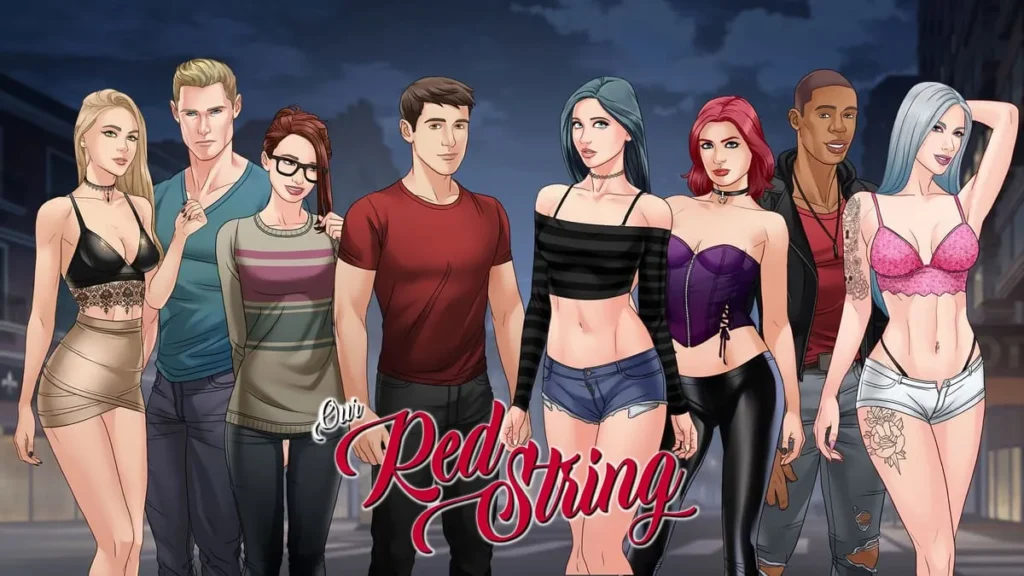
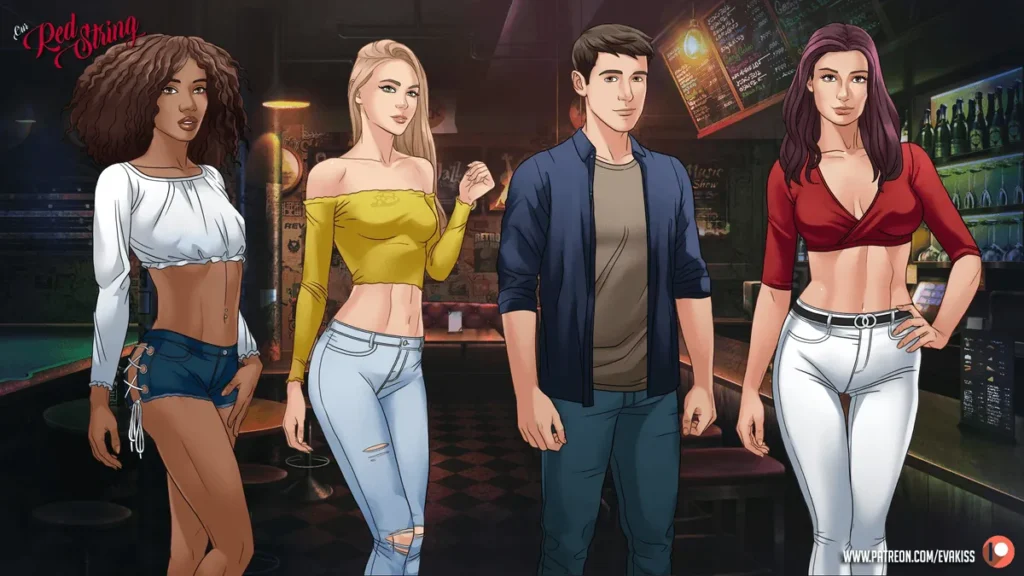
Our Red String stands out as a sophisticated visual novel that prioritizes meaningful player choice and interconnected storytelling. Unlike many games in its genre, this title emphasizes genuine branching narratives where decisions carry weight and long-term consequences. Players navigate complex relationships between characters like Lena and Ian, each choice reshaping the story’s direction. The game’s reputation for well-crafted narrative design and high replay value has earned it recognition among fans of interactive fiction. Whether you’re exploring different relationship paths or discovering hidden story branches, understanding how the game’s choice system works is essential to maximizing your experience.
Understanding Our Red String’s Choice-Driven Narrative System
Let’s be honest, we’ve all played those games where a “major” choice pops up, you sweat over it for a full minute, and then… nothing really changes. The dialogue is slightly different, but the story chugs along the same predetermined track. It leaves you feeling a bit cheated, doesn’t it? 😤
Well, let’s erase that feeling right now. Our Red String is built on an entirely different philosophy. Here, your decisions aren’t just decorative; they are the architects of your entire experience. This isn’t about picking a flavor of dialogue; it’s about laying down tracks for a train that can head in a dozen different directions. The core of the game is a sophisticated, interwoven visual novel branching narrative system designed to make every click count.
I learned this the hard way on my first playthrough. I made what I thought was a harmless, flirtatious comment to one character at a party. It seemed like a small moment, but it subtly shifted the dynamics between three other characters. Chapters later, that one offhand remark closed off a potential friendship path I didn’t even know existed, while opening up a new, tense narrative thread I hadn’t anticipated. That’s the magic—and the ruthless honesty—of this game. Every choice is a pebble thrown into a pond, and the ripples touch every shore.
How Meaningful Decisions Shape Your Story Path
So, how does Our Red String turn simple dialogue options into genuine narrative power? It starts by rejecting the illusion of choice. In many games, branches eventually merge back into the main trunk. Here, branches beget more branches, creating a sprawling narrative tree where no two playthroughs are alike. The choices impact story on a structural level, determining which scenes you see, which characters you connect with, and ultimately, which endings become possible.
Think of it less like a “choose your own adventure” book with a few endings, and more like navigating a complex social web. A decision in Chapter 2 isn’t just about that moment; it sets a precedent, establishes your character’s personality, and alters how others perceive you. For example, playing as Ian, you might have the option to confide in a friend about a personal struggle. Choosing to open up builds a foundation of trust for that relationship, potentially unlocking supportive scenes or crucial help later. Choosing to shut down and handle it alone reinforces a “lone wolf” persona, which might make you seem stronger to some characters but emotionally unavailable to others.
This is the essence of meaningful decisions in games. It’s not about “good” or “bad” in a moral sense, but about defining who Lena and Ian are through action. Do they prioritize their careers, their passions, or their relationships? Are they cautious or impulsive? The game doesn’t judge you; it just faithfully weaves these traits into the fabric of the story. You’re not watching a story about Lena and Ian—you are actively writing it with every interaction.
Pro Tip: Don’t save-scum your first playthrough! The beauty of Our Red String is living with your decisions and seeing the authentic, often unexpected, story that unfolds. The replay value comes from starting fresh and making different foundational choices.
The Consequence System: Trading Off Outcomes for Strategic Gameplay
This is where the system gets truly strategic. Our Red String operates on a powerful principle of interactive fiction choice consequences: you can’t have it all. Choosing one path often means sacrificing or complicating another. This creates deliciously tense moments where you have to weigh what’s most important to you.
Let’s say Lena gets two enticing invitations for the same evening: a crucial networking event for her music career and a intimate dinner date with a love interest. You can only pick one. The career event might unlock a new professional contact and a story branch about artistic collaboration. The date will deepen the romantic relationship, potentially leading to new levels of intimacy and shared scenes. But choosing one means the other opportunity is gone, perhaps permanently altering that character’s availability or attitude. This trade-off system forces you to engage with the game’s world strategically, thinking about long-term goals rather than short-term gratification.
It also applies to smaller moments. Agreeing to cover a shift for a coworker might boost your “Responsibility” metric with your boss, but it could cause you to miss a meet-up where a friend needed emotional support, lowering their satisfaction. The game is constantly tracking these micro-shifts, building a unique profile for your playthrough.
To visualize how this works, here’s a breakdown of how a single pivotal choice can radiate out into different narrative and relational outcomes:
| Choice Context (as Lena) | Option A | Option B | Immediate Consequence | Long-Term Narrative Branch |
|---|---|---|---|---|
| A close friend confesses they have feelings for you, but you’re interested in someone else. | Gently reject them to avoid leading them on. | Hesitate and say you need time to think, not wanting to hurt them. | Option A: Friend’s satisfaction drops sharply but cleanly. Option B: Friend’s satisfaction gets a small, hopeful boost. | Option A: Friendship may become distant but stable. A new, platonic story branch opens. Option B: Friend remains in hopeful pursuit, creating ongoing tension and possible confrontation later, especially if you pursue another romance. |
| You witness a colleague taking credit for your work. | Confront them directly and publicly. | Gather evidence and report it privately to a supervisor. | Option A: Colleague becomes an open enemy; some coworkers see you as assertive, others as dramatic. Option B: You gain a reputation for being shrewd and professional; the colleague is quietly reprimanded. | Option A: Unlocks a story of office rivalry and conflict, with potential public showdowns. Option B: Unlocks a more political, behind-the-scenes career path where subtlety is rewarded. |
| Ian is offered a lucrative but ethically questionable job. | Take the job for the financial security. | Turn it down on moral grounds. | Option A: Immediate money boost, reduces “Financial Stress” flag. Option B: No money gain, but increases “Integrity” metric. | Option A: Story introduces wealthy but morally ambiguous contacts; may create distance from characters who value ethics. Option B: Story maintains connections with principled characters; may lead to harder but more fulfilling opportunities. |
This table shows just a glimpse of the cause and effect at play. The how do game choices affect story question is answered here in granular detail. There’s no “right” answer, only the path you choose to walk and the story that naturally grows from it.
Relationship Mechanics and Character Satisfaction Tracking
Now, let’s get under the hood of what makes these consequences feel so real: the game’s brilliant relationship mechanics visual novel fans will appreciate. Every major character has a dynamic relationship meter, but Our Red String goes much deeper with its character satisfaction tracking gameplay. This isn’t just a simple “like/dislike” bar. It’s a multi-faceted system that measures how content, fulfilled, and connected a character feels in their relationship with Lena or Ian.
Think of it this way: you can be in a romantic relationship with someone (a status), but their satisfaction with that relationship could be low if you consistently ignore their needs, break promises, or clash on fundamental values. This satisfaction level is the key that unlocks or locks doors in the story. A character with high satisfaction will confide secrets, offer help, and open up new, vulnerable scenes. A character with low satisfaction might become withdrawn, argumentative, or even end the relationship entirely, closing off whole branches of the game.
These mechanics track several invisible, yet crucial, dimensions:
* Trust: Do you keep their secrets? Are you honest?
* Respect: Do you value their time, opinions, and boundaries?
* Emotional Intimacy: Do you share personal feelings and support them in crises?
* Shared Interests: Do you engage with their passions and hobbies?
Your choices constantly feed into these metrics. Forgetting an important date, choosing work over them repeatedly, or siding with their rival in an argument will chip away at satisfaction. Remembering small details, being their champion, and sharing meaningful moments will build it up. This creates incredibly realistic relationship mechanics visual novel interactions that mirror the complexities of real-life connections.
The game recognizes several key relationship states that are determined by your choices and the underlying satisfaction levels:
* Close Friendship/Allies: High platonic satisfaction and trust.
* Romantic (Dating/Casual/Committed): Varying levels of romantic satisfaction and intimacy.
* Strained/Conflict: Low satisfaction, leading to arguments and distance.
* Professional Rival/Neutral: Based on career-based choices with minimal personal investment.
* Estranged/Broken: Satisfaction hit zero, and the relationship has effectively ended, altering the story landscape.
Managing these relationships is a core part of the interactive fiction choice consequences. You might have to choose who to support in a conflict, knowing it will please one character but alienate another. This makes every social interaction a delicate balancing act with real narrative weight.
In my second playthrough, I focused heavily on Lena’s music career, often canceling plans with her love interest to pursue gigs and studio time. I unlocked amazing storylines about artistic growth and industry politics. However, I neglected the subtle signs of my partner’ dwindling satisfaction. When the inevitable breakup scene happened, it wasn’t a simple “game over” for the romance. It triggered a whole new, poignant narrative branch about loss, regret, and Lena channeling that heartbreak into her songwriting—a story I never saw coming and couldn’t have accessed if I’d “perfectly” managed the relationship. That’s the genius of the system: even “failures” are just different, equally rich stories.
Ultimately, Our Red String offers a masterclass in meaningful decisions in games. It proves that when choices have weight, consequences are tangible, and relationships are complex systems to navigate, players become true co-authors. Your journey is uniquely yours, painted in the specific shades of joy, regret, ambition, and love that you choose along the way. So, dive in, make your choices without fear, and discover what kind of story you’re meant to tell. 🎭💖
Our Red String distinguishes itself through sophisticated narrative design that respects player agency and creates genuine consequences for every decision. The game’s strength lies in its interconnected systems where relationship mechanics, stat progression, and branching storylines work together to create a dynamic experience. Whether you’re carefully managing multiple relationships, strategically developing specific stats to unlock hidden scenes, or simply exploring how different choices reshape character dynamics, the game rewards thoughtful engagement with its systems. The high replay value comes from understanding how early decisions cascade into later story branches, making each playthrough feel genuinely different. For players seeking a visual novel that treats choices as meaningful rather than cosmetic, Our Red String offers the depth and narrative complexity that has earned it recognition within the interactive fiction community.